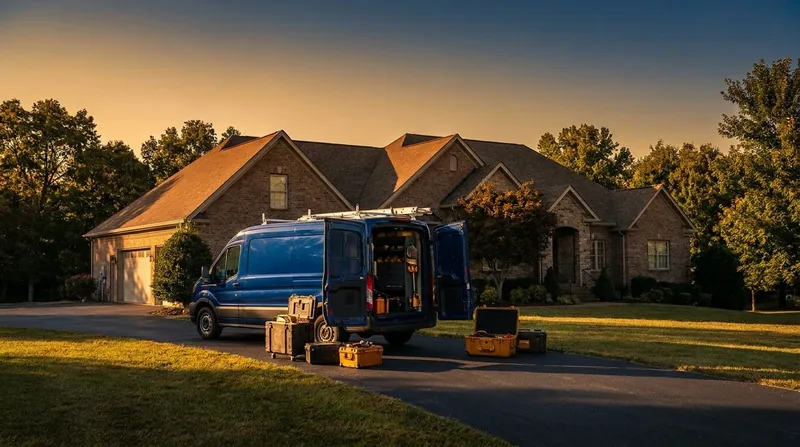
How to Start a Cleaning Business in Texas: Sales Tax and Insurance
How to Start a Cleaning Business in Texas: Sales Tax and Insurance
Learning how to start a cleaning business in Texas is simpler on the licensing side than most people expect. Texas does not require a state license to run a maid service, a residential cleaning company, or an office or janitorial business. The paperwork that matters most is a sales tax permit from the Texas Comptroller, because most cleaning services are taxable, plus a clear plan for forming the business, insuring it, and handling workers.
This guide walks through those steps in order, with the fees and timelines we verified against official sources. It is informational content, not legal or tax advice. Before you sign a lease, a client contract, or a payroll agreement, talk with a qualified attorney or CPA, especially if you plan to hire employees or use subcontractors.
Do you need a cleaning license in Texas?
No. Texas has no state license for cleaning businesses, and there is no state licensing for maids or house cleaners. The state also does not issue a general business license, and it does not license general contractors or roofers at the state level. Counties do not license cleaning companies either. The only county filing most small cleaning businesses encounter is the assumed name certificate, which sole proprietors file with the county clerk.
No license does not mean no paperwork. The tax rules for cleaning services are where most new owners get caught, so read the sales tax section below before you send your first quote.
Materials and information to gather first
Collect these items before you file anything:
- A proposed business name, checked against Texas Secretary of State records
- A Texas street address for the business and, for an LLC, a registered agent with a physical Texas address
- Your personal identification and a separate business bank account
- A federal Employer Identification Number from the IRS, which you need for payroll and which banks and clients often request
- A list of services you will sell, such as recurring home cleaning, move-out cleaning, office cleaning, or post-construction cleaning
- Insurance quotes from a licensed agent, including general liability and commercial auto coverage if you use a vehicle for work
- A price sheet that shows how sales tax will appear on each invoice
Step 1: Choose your business structure
Your structure decides which filings you make and how much paperwork you carry each year. Most cleaning owners choose between a sole proprietorship and a Texas limited liability company (LLC).
A sole proprietorship requires no formation filing with the state. If you operate under your own name, you can skip ahead. If you use another name for your business, you must file an assumed name certificate with the county clerk in each county where you maintain an office or conduct business. Clerk fees vary by county, so confirm the amount before you file.
An LLC can separate your personal assets from business debts and contracts, which matters if a client claims property damage or a worker is hurt on a job. It costs more and requires more filings, but many owners choose it once they begin hiring. Liability protection has limits, including for your own negligence, so confirm with an attorney how it applies to you. It is not a substitute for insurance.
Step 2: Check your name and file with the Secretary of State
If you form an LLC, check the name before you file. The Texas Secretary of State requires that your name be distinguishable from every existing domestic or registered foreign filing entity, name reservation, or registration in its records. The name must include an organizational designation such as Limited Liability Company, Limited Company, LLC, L.L.C., LC, or L.C. It may not imply a purpose the LLC is not authorized to pursue, and it may not falsely suggest an affiliation with a government entity. Search the Secretary of State's business records, or call (512) 463-5555 for a preliminary availability check.
If you need time to finish paperwork, you can file a name reservation for $40. It holds the name for 120 days.
The Certificate of Formation for an LLC is Form 205, with a filing fee of $300. File through SOSDirect, the Secretary of State's online portal, which the office says gives the fastest processing. The office does not publish a guaranteed standard turnaround. Mailed or hand delivered documents generally take at least one business day just to be entered.
If you need a guaranteed timeline, the paid Texas Express expedite tiers are the only option. Standard Expedite costs $50 per document and is typically processed within two to three business days. Next Day Expedite costs $500 per document for filings received by 12:00 p.m., and Same Day Expedite costs $750 per document for filings received by 12:00 p.m. Expedite fees are in addition to the filing fee.
Registered agent rules
Every LLC must continuously maintain a registered agent and registered office in Texas. The agent must be a Texas resident individual, a domestic entity, or a foreign entity registered to transact business in Texas. Your LLC cannot serve as its own agent. The registered office must be a physical street address where the agent can be personally served during business hours. A post office box, mail forwarding service, or answering service alone does not qualify. A change of agent or office costs $15.
Assumed names for LLCs
If your LLC operates under a name other than its legal name, file an assumed name certificate (Form 503) with the Secretary of State for $25. Since September 1, 2019, LLCs no longer also file with the county clerk. A certificate can state a term of up to 10 years, so calendar the refiling date before it expires. Texas does not require a newspaper publication.
Step 3: Get a Texas sales tax permit before you quote
This is the step that catches most cleaning owners. Under Texas Tax Code 151.0048(a)(4), janitorial services, building and grounds cleaning, and custodial services are taxable real property services. A cleaning company that bills clients for these services must charge sales tax and report it, which means you need a sales and use tax permit from the Texas Comptroller of Public Accounts.
The permit is issued at no charge, but it typically takes two to three weeks to process. Apply before you accept your first booking through the Comptroller's permit page.
The Texas state sales tax rate is 6.25 percent. Local jurisdictions may add up to 2 percent, for a combined maximum of 8.25 percent. Local rates can vary by location, so confirm the correct rate for each job site with the Comptroller rather than applying one rate across your whole service area.
| Sales tax component | Rate |
|---|---|
| Texas state sales tax | 6.25 percent |
| Local sales tax | Up to 2 percent, depending on location |
| Combined maximum | 8.25 percent |
The household exception rarely fits a cleaning company
Comptroller Rule 3.356 covers domestic services in a narrow case: a self-employed person working as an employee of the household itself. That exception does not cover a maid service business with employees or subcontractors. If your company sends workers into client homes, plan to charge sales tax rather than assume the household exception applies.
Questions to confirm with the Comptroller
- How to report a single price that includes both labor and supplies. Do not assume the supplies are exempt.
- Your filing frequency and due dates, which the Comptroller assigns after you register.
- The correct local rate for each city or county where you work.
Step 4: Handle your state tax filings
Texas has no personal income tax and no corporate income tax. Businesses instead pay the franchise tax, a privilege tax administered by the Comptroller. Confirm with the Comptroller whether it applies to your structure.
For the 2026 and 2027 report years, the no tax due threshold is $2,650,000 in total revenue. An entity at or below that amount owes no franchise tax, but it must still file a Public Information Report. That report is due May 15 each year to the Comptroller, not the Secretary of State, and the Secretary of State charges no annual report fee. Above the threshold, the rate is 0.375 percent for retail and wholesale and 0.75 percent for other entities. A cleaning company is a service business, so it likely falls under the 0.75 percent rate, but confirm the classification with a CPA. Entities under $20 million in total revenue may use the 0.331 percent EZ Computation rate.
Step 5: Decide how you will handle workers
Many cleaning companies start as one owner and grow into a crew. Your choice between employees and subcontractors affects taxes, insurance, and liability, so make it deliberately.
Texas does not require workers' compensation coverage for most private employers. It is optional. Owners who do not carry it can lose some standard protections if a worker is injured, so talk with an attorney before you decide. Many commercial clients and building owners still ask for proof of coverage, so plan for that request. Confirm employer registration requirements with the Texas Workforce Commission before your first payroll.
Calling a worker a subcontractor does not settle the question. If you set schedules, supply equipment, train people in your methods, and control how the work gets done, the worker may look like an employee regardless of the label. Confirm the classification with an attorney or CPA before you sign agreements.
Step 6: Buy insurance and bonding
Because Texas has no cleaning license, no state agency sets a required insurance list for your business. Your clients, landlords, and contracts set the standard instead, and most commercial clients expect proof of coverage before they hire you. Ask a licensed agent to quote these coverages:
- General liability, which covers third-party property damage and injuries that happen during a job
- Commercial auto coverage if you drive a vehicle for business
- Workers' compensation, if you hire employees and choose to carry it
- Bonding or fidelity coverage, which many clients request for staff who enter homes or offices with keys, alarm codes, or access to valuables
Get at least three quotes and compare what each policy covers, not only the premium. Read the exclusions, especially for employee theft and damage to client property. Keep current certificates of insurance on file. If a contract requires you to name the client on your policy, ask your agent to add that endorsement before the job begins.
Step 7: Check city and local requirements
Counties license nothing for cleaning companies beyond the assumed name filing for sole proprietors. Cities can still set their own rules on home-based businesses, signage, and commercial vehicles. Check your city's website or planning office before you run the business from a home address or park a company van in a residential area.
The Texas Business Licenses and Permits Guide, published by the Business Permit Office within the Texas Economic Development and Tourism Office, is the state's reference for identifying the specific permits that apply to your activity. The Texas Small Business Development Center Network can also help you plan the whole process.
Common mistakes to avoid
- Assuming house cleaning is exempt from sales tax. The household exception is narrow and does not cover a maid service with employees or subcontractors.
- Quoting jobs before your permit is issued, then having no clear way to explain a tax line to the client later.
- Using a mailbox or mail forwarding address as your LLC's registered office. Texas requires a physical street address where the agent can be served.
- Skipping the Public Information Report because your revenue is under $2,650,000. The report is still required.
- Letting an assumed name certificate expire.
- Skipping insurance because no state requires it. Clients set the standard, and an uninsured job can end a contract quickly.
- Filing before you check the name against Secretary of State records, which can delay your formation.
What results to expect
Your first months are mostly about setup and client acquisition. Results vary widely by market, pricing, and how much time you put into sales. Many owners find that recurring residential or commercial contracts are more predictable than one-time jobs, though that is a common pattern, not a promise. Plan for several weeks of state paperwork and permit processing before your first paid job.
Use careful wording in your marketing. Avoid promising that a service removes germs or prevents illness unless the products and methods you use support that claim, and confirm the labeling requirements for any chemicals you buy.
Official Texas resources
- Texas Secretary of State: formation and filing information
- Texas Secretary of State business search
- SOSDirect online filing
- Assumed name FAQs
- Secretary of State fee schedule (Form 806)
- Texas Comptroller of Public Accounts: taxes
- Texas sales and use tax permit
Disclaimer: This article is informational content, not legal or tax advice. Fees, processing times, and rates can change, so confirm current figures on the official agency pages linked above. Consult a qualified attorney or CPA before making decisions about your business structure, taxes, insurance, or workers.
Keep exploring: related Texas guides
- How to Start an Irrigation or Landscaping Business in Texas
- How to Start a Junk Removal Business in Texas
- How to Start a Pest Control Business in Texas
- How to Start a Lawn Care Business in Texas
- Texas Contractor License
- How to Start an LLC in Texas
- Texas Business License
- How Much Does It Cost to Start a Business in Texas
- All Texas business types
- Every Texas guide in one place